
Ultimate Guide to Autonomous Code Development
Explore how autonomous code development leverages AI to streamline coding workflows, enhance quality, and transform software engineering practices.
Quick navigation
Autonomous code development is transforming software engineering by allowing AI systems to generate, modify, and optimize code with minimal human input. Instead of manually writing every line, developers can focus on setting goals and reviewing AI-generated outputs. This approach speeds up delivery, ensures consistent quality, and scales effortlessly for large teams. Here's what you need to know:
- What It Is: AI tools handle entire workflows, from interpreting requirements to delivering functional code, with varying levels of autonomy.
- Why It Matters: Reduces repetitive tasks, ensures coding consistency, and allows developers to focus on system design and higher-level decisions.
- Core Technologies: Large language models, reinforcement learning, and multi-modal processing enable these systems to understand context and generate reliable solutions.
- Challenges: Security risks, code quality concerns, and skill erosion require careful human oversight and rigorous testing.
- Best Practices: Gradual adoption, thorough code reviews, and clear policies around AI usage help mitigate risks.
Tools like CodeRide are leading this shift by addressing common pain points, such as the need to repeatedly explain project context to AI tools. With features like persistent memory, task optimization, and IDE compatibility, CodeRide ensures smooth workflows and faster development cycles. However, human oversight remains essential to ensure quality and security.
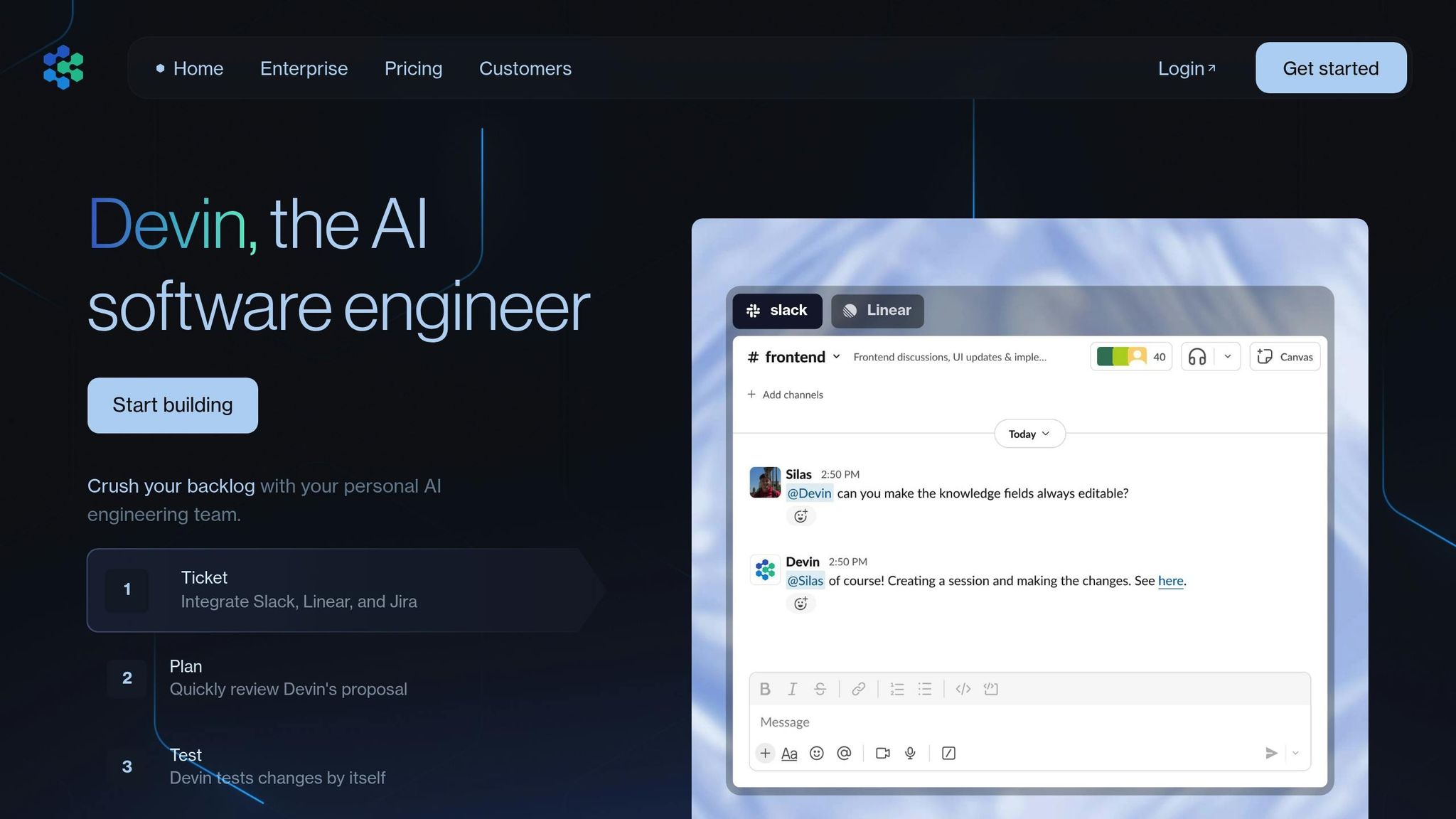
Inside Devin: The AI engineer that's set to write 50% of its company’s code this year | Scott Wu
Core Technologies Behind Autonomous Coding
Understanding the technology stack behind autonomous coding systems sheds light on how they function. These systems rely on advanced AI technologies designed to interpret context, generate code, and make informed decisions about implementation. Let’s dive into the key technologies that power these systems.
AI Technologies That Enable Autonomous Coding
At the heart of autonomous coding are large language models. These models, trained on billions of lines of code, can interpret natural language requirements and recognize code structures. They’ve absorbed patterns from repositories, documentation, and even programming discussions, enabling them to produce solutions tailored to specific contexts.
Transformer architectures play a vital role here. They help these models maintain context over long sequences, ensuring that the generated code aligns with the patterns and conventions of the existing codebase.
Modern systems go beyond simple pattern recognition with contextual analysis. By analyzing entire codebases, they grasp relationships between components. This allows them to ensure that changes in one section of the code won’t inadvertently affect others. They also recognize when new code needs to align with existing architectural patterns or business logic.
Through multi-modal processing, these systems can simultaneously handle diverse inputs like natural language descriptions, existing code, documentation, and test cases. This capability ensures the solutions they generate meet all specified requirements.
Reinforcement learning enables these systems to improve over time. By learning from feedback - whether it’s test results, code reviews, or production performance - they refine their ability to generate high-quality code.
Different Levels of AI Autonomy
These underlying technologies support a range of autonomous coding capabilities. Systems operate across a spectrum of independence, with each level offering distinct functionalities and requiring varying levels of human oversight.
-
Level 1: Code Completion and Suggestions
This is the most basic form of AI assistance. These tools predict the next few lines of code based on the current context. While helpful, they aren’t autonomous, as developers must approve or reject every suggestion. -
Level 2: Function and Method Generation
At this level, systems can generate complete functions based on natural language descriptions or function signatures. They handle intended behavior, error management, and edge cases independently but still rely on developers for broader architectural decisions. -
Level 3: Feature Implementation
These systems can take on user stories or feature requests, breaking them into multiple functions, classes, or files. They understand how different components interact and can generate implementations that span across a codebase. -
Level 4: Project-Level Autonomy
The most advanced level, these systems handle entire development workflows, from analyzing requirements to implementation, testing, and deployment. They make architectural decisions, refactor code as needed, and ensure seamless integration of new features into existing systems.
As these systems progress through the levels, their focus shifts from merely generating code to making sophisticated decisions with minimal human intervention. Higher levels require an understanding of business needs, technical constraints, and long-term maintainability.
Requirements for Autonomous Coding
While the technology is impressive, successful autonomous coding also depends on a well-prepared development environment and streamlined processes. Several key factors contribute to the effectiveness of these systems.
Codebase accessibility is crucial. Autonomous systems need access to the entire codebase, along with documentation and tests, to identify patterns and make informed decisions.
Standardized development workflows are essential. Consistent coding standards, review processes, and deployment procedures allow AI systems to learn and replicate these practices. Organizations with clear guidelines and principles achieve better results when implementing autonomous coding.
Integration with development environments ensures that these systems can seamlessly operate within existing toolchains. This includes compatibility with version control systems, CI pipelines, and testing frameworks, allowing the AI to function as part of the established development process.
Quality assurance mechanisms become even more critical. Automated test suites, code quality checks, and review processes help ensure that AI-generated code meets the same standards as human-written code. These systems should align with existing quality gates and approval workflows.
Security and access controls are a top priority. Autonomous coding tools need appropriate permissions to access codebases and create new code while maintaining strict security boundaries. Organizations must define clear policies regarding what these systems can access and modify.
Monitoring and feedback systems are key to continuous improvement. By analyzing which generated code performs well, gets approved quickly, or requires changes, these tools can adapt and refine their approach over time.
Finally, computational resources are a practical consideration. Running AI models for real-time code generation and analysis demands significant processing power. Organizations must account for these infrastructure costs and ensure their systems can handle the workload of autonomous coding tools.
Using CodeRide for Autonomous Development
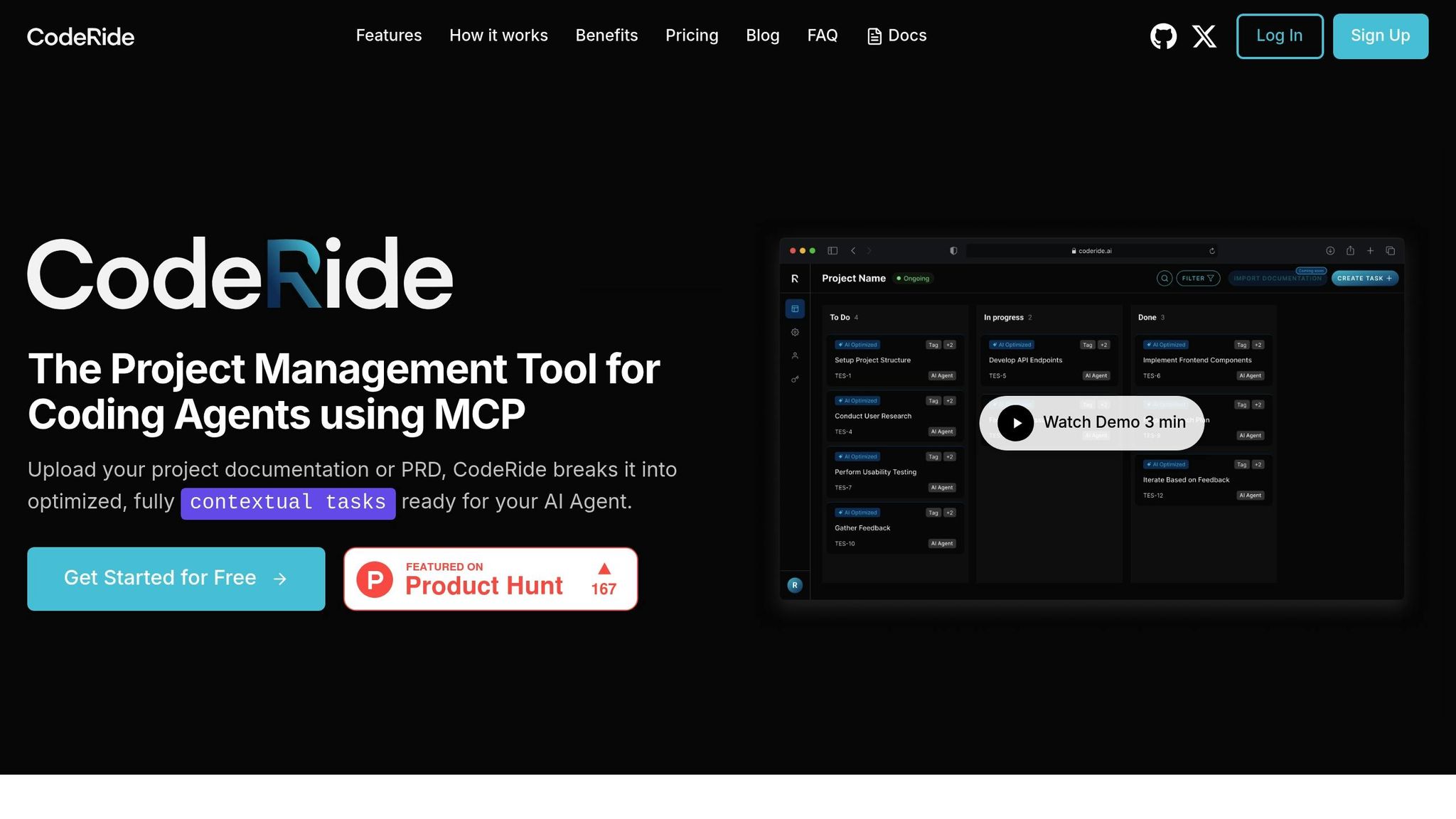
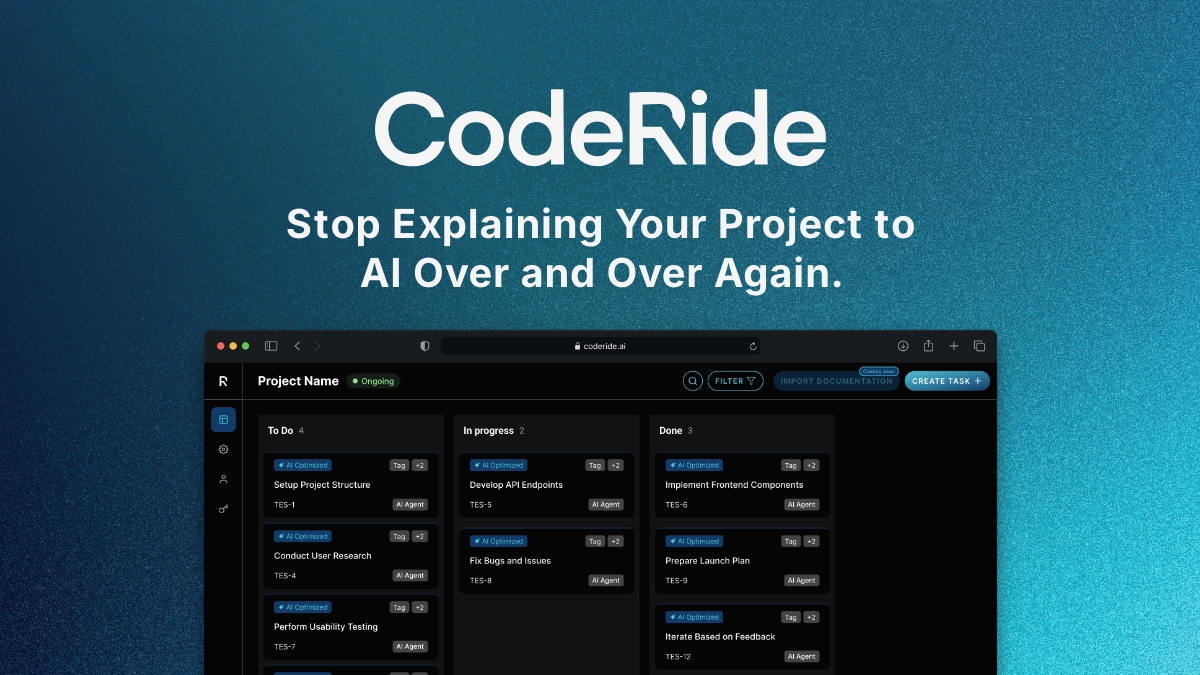
CodeRide is designed to tackle common hurdles in AI-assisted coding, providing a smarter way to manage development workflows. By keeping a continuous understanding of your entire project, it enables a seamless, autonomous coding experience.
One of the biggest challenges developers face with AI coding tools is the context reset problem. A whopping 65% of developers report having to repeatedly explain project details and architectural choices to their AI assistants, which disrupts workflow and wastes time [1]. CodeRide solves this with its persistent memory system, allowing you to maintain your momentum without constantly re-explaining your work. This is the foundation for CodeRide's standout features.
CodeRide's Key Features
At the heart of CodeRide is its ability to maintain full project context awareness. It goes beyond simple code completion by analyzing your entire codebase and documentation. This allows it to grasp architectural decisions, coding standards, and even the relationships between different elements of your business logic.
Another standout feature is task optimization. CodeRide can pull actionable tasks directly from your project documentation and enhance them with AI-driven insights for autonomous execution. This ensures that every task aligns with your project’s specific goals while maintaining consistency across the board.
The platform also integrates seamlessly with your workflow through its MCP (Multi-Agent Communication Protocol). This allows your AI agent to connect directly to CodeRide's persistent memory system, giving it uninterrupted access to all project knowledge and decisions.
IDE compatibility is another strong point. CodeRide works with popular tools like VS Code, Cursor, Windsurf, Claude, and GitHub Copilot. This means you can keep using the tools you’re comfortable with, without having to adapt to a completely new environment.
Finally, CodeRide introduces a token economy system to make AI usage more efficient. By retaining full context, it minimizes the need for repetitive context-setting, saving time and speeding up development cycles.
How CodeRide Solves Developer Problems
The context reset problem is a major source of frustration for developers. Having to repeatedly explain project structures, conventions, and decisions eats up valuable time. CodeRide's persistent memory system eliminates this hassle, allowing for smoother workflows.
"CodeRide's persistent memory system eliminates this frustration, enabling true vibe coding workflows." - CodeRide Team [1]
Inconsistent AI outputs can also slow teams down, especially when tools lack shared project context. CodeRide fixes this with its unified knowledge base, ensuring that every team member works with consistent coding patterns and adheres to architectural guidelines.
Workflow inefficiencies, like constantly correcting AI misunderstandings, are another pain point. Teams using CodeRide report completing tasks 55% faster compared to traditional AI-assisted workflows [1]. This is because CodeRide eliminates the need for constant context-switching and reduces the time spent on fixing errors.
Another common problem is project knowledge fragmentation, where valuable insights are scattered across documentation, comments, and team members. CodeRide centralizes all this information into a single source that AI agents can access, ensuring no detail gets lost.
Getting Started with CodeRide
CodeRide makes it easy to dive in with free Beta Access, no credit card required [1].
To get started, you simply import your project documentation, initialize your project, and integrate CodeRide using your API key. This sets up the persistent memory system that ensures a continuous context flow in your IDE.
Once configured, your AI agent can begin autonomous development in your favorite IDE. It retrieves tasks, completes them, and keeps your architectural decisions intact, ensuring consistency across all generated code.
With its continuous context flow, every development session builds on the last. Your AI agent stays aware of past decisions, the current project state, and future goals, creating a seamless development experience that aligns perfectly with your project’s vision. Once set up, you’ll see how effortless autonomous workflows can be.
sbb-itb-4fc06a1
Workflows for Autonomous Coding
Autonomous coding simplifies software development by leveraging AI-driven workflows. CodeRide's platform uses a persistent context system to ensure that generated code aligns seamlessly with the project's architecture and standards. These workflows do more than just create code - they manage the entire development process, from building new features to ensuring quality through reviews.
Automating Feature Development
Developing new features becomes much more efficient with a structured process that turns requirements into working code. CodeRide takes project documentation and PRDs (Product Requirement Documents) and transforms them into detailed, context-rich tasks. These tasks guide AI agents to autonomously develop features directly within your preferred IDE [2]. To ensure quality, the platform integrates architectural decisions and coding patterns into the code generation process, keeping everything consistent and reliable.
AI-Powered Debugging and Code Optimization
CodeRide doesn’t stop at feature creation - it also enhances debugging and optimization. By analyzing the persistent context of the codebase, the platform identifies issues and suggests improvements, making the code cleaner and more efficient without requiring constant human intervention.
Automated Code Reviews and Pull Requests
CodeRide also takes the hassle out of quality assurance with automated code reviews. Thanks to its persistent context system, every development session is grounded in the project's standards and guidelines. This allows CodeRide to automate reviews and pull requests, ensuring that new code is consistently checked against established project rules [1]. The result? A dependable, streamlined codebase that stays aligned with your project's goals.
Benefits, Challenges, and Best Practices
Benefits of Autonomous Code Development
AI tools can cut down repetitive tasks by up to 30% [7], freeing developers to tackle strategic challenges. This boost in productivity helps teams complete projects faster while dedicating more energy to innovation and solving complex problems.
Code consistency is another major plus. AI ensures uniform coding patterns across entire codebases, which reduces technical debt and makes long-term maintenance easier. Scalability also becomes more manageable, as teams can handle larger projects without needing to expand headcount. Autonomous systems can generate multiple components simultaneously while maintaining quality.
These benefits highlight how tools like CodeRide can deliver more efficient, consistent, and scalable development processes. However, this approach isn't without its challenges.
Common Challenges and Risks
Security vulnerabilities remain a significant concern with AI-generated code [4]. More than half of organizations have reported security issues tied to AI-generated code, and 87% of developers are worried about these risks [4]. AI systems might include unsafe code snippets, outdated libraries, or even replicate known vulnerabilities from their training data.
Code quality issues are also a frequent problem, with 46% of AI-generated code requiring fixes before deployment [3]. While the code might work, it can lack optimization or contain subtle errors that only become apparent in production environments.
Skill erosion is another risk. Over 60% of developers learn by reviewing code [7], but relying heavily on AI can limit these learning opportunities. Over time, this could weaken essential coding skills.
Intellectual property concerns add to the complexity. Questions about code ownership and potential license violations from AI training data create legal uncertainties [3][6][7]. Additionally, data privacy and compliance issues arise when AI platforms process sensitive information without adhering to regulations like GDPR or HIPAA [3][5].
Even with CodeRide's advanced features, these challenges emphasize the need for human oversight in autonomous coding environments.
Best Practices for Implementation
To navigate these challenges effectively, consider the following best practices:
- Conduct rigorous code reviews for AI-generated output, treating it with the same scrutiny as code from junior developers. Pair programming and automated testing can help catch potential issues before deployment [4][6].
- Adopt AI gradually, starting with non-critical systems to minimize risks [6]. Clearly define which tasks are suitable for AI and which require human expertise.
"Artificial intelligence takes away routine, but not responsibility. Developers still shape the product, guide the process, and make the final calls." - Oleksandr Prokopiev, CEO at Artjoker [3]
- Train developers to analyze and improve AI-generated code through secure coding programs [6]. Regular audits of training data and clear documentation for AI-generated components are essential [6].
- Set clear objectives for AI use instead of adopting it broadly without direction [7]. Encourage experimentation through A/B testing and knowledge sharing to identify where AI performs best [7].
"Artificial intelligence gives speed, but it also adds new risks. To use it well, companies must balance innovation with control." - Oleksandr Prokopiev, CEO of Artjoker [3]
- Verify licenses and compliance by checking AI-generated code for license compatibility. Automated monitoring tools can help avoid legal pitfalls [6].
The Future of Coding with CodeRide
The world of software development is evolving fast, with AI-driven autonomy taking center stage. Leading this shift is CodeRide, a platform designed to revolutionize how developers approach coding.
What sets CodeRide apart is its ability to provide AI agents with a deep understanding of a project’s structure, dependencies, and patterns. This comprehensive context ensures smarter code generation, improved task management, and uniform coding styles throughout an application.
Even better, CodeRide integrates effortlessly with popular IDEs, so developers don’t have to change their workflows. Instead, they can enhance their existing tools with autonomous features that adapt to their project needs while maintaining familiar coding conventions.
CodeRide is also pushing boundaries with its MCP integration, which allows AI agents to perform tasks independently while keeping the bigger picture in mind. This reduces the need for constant human oversight, giving developers more time to focus on creative problem-solving.
Looking ahead, CodeRide’s token economy feature promises to streamline AI usage by introducing transparent token management. This ensures that teams of any size can leverage autonomous coding in a cost-efficient way, making advanced tools accessible to everyone - not just large organizations with vast resources.
FAQs
How does CodeRide ensure the security of AI-generated code?
CodeRide takes the security of AI-generated code seriously by using AI-driven scanning tools and real-time threat detection. These technologies work together to spot vulnerabilities, like business logic flaws or malicious code, right in the development phase. This proactive approach adds a crucial layer of defense.
On top of that, CodeRide integrates human code reviews and Software Composition Analysis (SCA) to address risks tied to third-party libraries and open-source components. By blending cutting-edge AI tools with expert human oversight, CodeRide ensures that the code it generates is not only functional but also secure and dependable.
How can developers ensure high-quality AI-generated code when using tools like CodeRide?
To produce high-quality AI-generated code, developers should adopt a thorough review process that blends manual code reviews with the use of automated static analysis tools. This approach helps spot bugs, ensures compliance with coding standards, and keeps the overall quality of the code in check.
Another key factor is providing the AI tool with clear project requirements and well-defined specifications. This step ensures the generated code matches the intended functionality and minimizes errors. On top of that, incorporating AI-powered review tools that deliver real-time feedback can further refine code quality, promoting best practices throughout the development cycle.
How does CodeRide's persistent memory feature streamline autonomous coding workflows?
CodeRide's persistent memory feature simplifies your workflow by keeping track of your project's context, settings, and preferences across sessions. This means you won't have to repeatedly set up or reconfigure your workspace, helping you save time and avoid unnecessary interruptions.
With this continuity in place, the AI tools can better understand your coding style, offering smarter suggestions that fit your needs. The result? Smoother development cycles and a boost in productivity.
Ready to transform your AI development workflow?
Experience seamless AI development with CodeRide. Eliminate context reset and build better software faster.
Share this article